
Lecanemab
Alternative Names: Leqembi
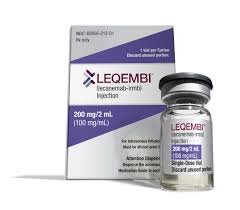
Lecanemab is a monoclonal antibody treatment for early Alzheimer’s disease that targets beta-amyloid, helping clear plaques from the brain. It is given as an intravenous infusion every two weeks and has been shown to modestly slow cognitive and functional decline in clinical trials. The therapy is approved for use in patients with mild cognitive impairment or mild dementia due to Alzheimer’s. The most important risks include amyloid-related imaging abnormalities (ARIA), such as brain swelling or microbleeds, so patients require regular MRI monitoring. While not a cure, lecanemab is considered a disease-modifying therapy that offers a new option in early-stage treatment.
Treatment Type: Prescription Medication
Treatment Class: Monoclonal antibody
Treatment Modality: Intravenous (IV)
Review Summary
Based on the review by Dr. Curbside, Lecanemab shows promise in treating early Alzheimer's disease by slowing cognitive and functional decline by approximately 25-30%. However, the treatment comes with significant risks like brain swelling and microhemorrhages, so it requires careful patient selection and monitoring.

This summary was generated by users' reviews
Breakdown by Category
Each categories are rated on a 1–5 scale, with 5 being the most favorable outcome and 1 being the least. These scores are averaged across all user reviews to provide a clear sense of how this treatment typically performs in each area.
 Cost
Cost Relief Speed
 Side Effects
 Treatment Line
Explore various treatment options to empower yourself in making a well-informed choice.
Choose treatments from the menu above to see how they compare side by side.
Choose treatments from the menu above to see how they compare side by side.
Choose treatments from the menu above to see how they compare side by side.
4.0
AI Summary of User Experiences
Not medical advice.
Based on the review by Dr. Curbside, Lecanemab shows promise in treating early Alzheimer's disease by slowing cognitive and functional decline by approximately 25-30%. However, the treatment comes with significant risks like brain swelling and microhemorrhages, so it requires careful patient selection and monitoring.
Cost Relief Speed Side Effect Treatment Line


Copyright © 2025,Curbside and related marks are registered trademarks of Curbside Tech Inc.
Reviews
Filter by reviewer type Pro