
Shoulder Immobilizer
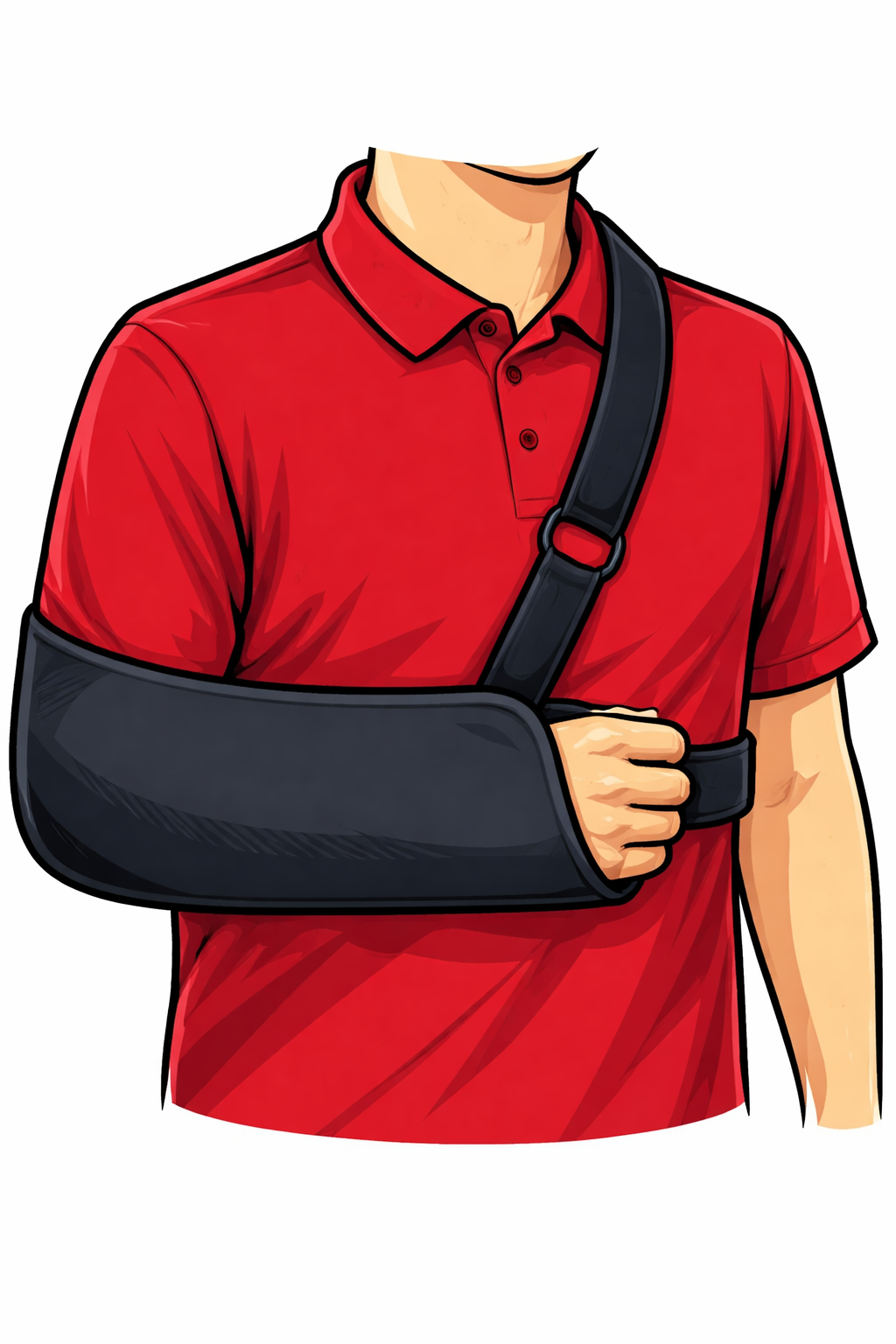
A shoulder immobilizer is a supportive brace used to keep the shoulder and arm stable after an injury or surgery. It typically consists of a sling that holds the forearm across the body along with straps that secure the arm against the torso to limit movement. By restricting motion, it helps reduce pain and allows injured structures—such as ligaments, tendons, or bones—to heal properly. Shoulder immobilizers are commonly used for conditions like shoulder dislocations, rotator cuff injuries, fractures, or after shoulder surgery. They are usually worn for a short period during the early healing phase as directed by a healthcare provider.
Treatment Type: Device
Treatment Class: N/A
Treatment Modality: N/A
Review Summary
Based on the reviewer's feedback, the Shoulder Immobilizer is described as an effective go-to treatment for clavicle fractures that keeps the arm and shoulder still to reduce pain and promote proper bone healing. Most broken collarbones reportedly heal well with this simple approach without requiring surgery, and it is typically worn for a few weeks until pain improves and the bone begins to heal.

This summary was generated by users' reviews
Breakdown by Category
Each categories are rated on a 1–5 scale, with 5 being the most favorable outcome and 1 being the least. These scores are averaged across all user reviews to provide a clear sense of how this treatment typically performs in each area.
 Cost
Cost Relief Speed
 Side Effects
 Treatment Line
Explore various treatment options to empower yourself in making a well-informed choice.
Choose treatments from the menu above to see how they compare side by side.
Choose treatments from the menu above to see how they compare side by side.
Choose treatments from the menu above to see how they compare side by side.
5.0
AI Summary of User Experiences
Not medical advice.
Based on the reviewer's feedback, the Shoulder Immobilizer is described as an effective go-to treatment for clavicle fractures that keeps the arm and shoulder still to reduce pain and promote proper bone healing. Most broken collarbones reportedly heal well with this simple approach without requiring surgery, and it is typically worn for a few weeks until pain improves and the bone begins to heal.
Cost Relief Speed Side Effect Treatment Line

Anonymous


Copyright © 2025,Curbside and related marks are registered trademarks of Curbside Tech Inc.
Reviews
Filter by reviewer type Pro