
Nitroprusside
Alternative Names: NIpride
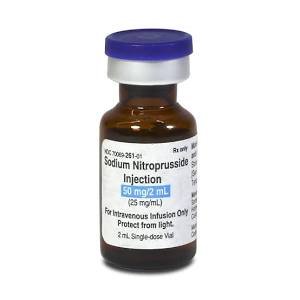
Nitroprusside is a powerful intravenous medication used in severe cases of acute heart failure to quickly lower blood pressure and reduce the workload on the heart. It works by causing rapid vasodilation, which decreases both preload and afterload, helping the heart pump more effectively and improving symptoms such as shortness of breath. Because it acts within minutes and is given as a continuous IV infusion, it is typically used in intensive care or closely monitored hospital settings. Blood pressure must be monitored carefully since the medication can cause significant hypotension if the dose is too high. It is usually reserved for more severe cases when rapid blood pressure control and afterload reduction are needed.
Treatment Type: Prescription Medication
Treatment Class: Nitrates
Treatment Modality: Intravenous (IV)
Review Summary
Based on the review, Nitroprusside is an effective but high-risk IV vasodilator for acute Congestive Heart Failure, capable of rapidly reducing preload and afterload. However, its use requires intensive care monitoring due to potential serious side effects like hypotension and cyanide toxicity, which leads some physicians to prefer alternative, less risky vasodilator treatments.

This summary was generated by users' reviews
Breakdown by Category
Each categories are rated on a 1–5 scale, with 5 being the most favorable outcome and 1 being the least. These scores are averaged across all user reviews to provide a clear sense of how this treatment typically performs in each area.
 Cost
Cost Relief Speed
 Side Effects
 Treatment Line
Explore various treatment options to empower yourself in making a well-informed choice.
Choose treatments from the menu above to see how they compare side by side.
Choose treatments from the menu above to see how they compare side by side.
Choose treatments from the menu above to see how they compare side by side.
3.0
AI Summary of User Experiences
Not medical advice.
Based on the review, Nitroprusside is an effective but high-risk IV vasodilator for acute Congestive Heart Failure, capable of rapidly reducing preload and afterload. However, its use requires intensive care monitoring due to potential serious side effects like hypotension and cyanide toxicity, which leads some physicians to prefer alternative, less risky vasodilator treatments.
Cost Relief Speed Side Effect Treatment Line


Copyright © 2025,Curbside and related marks are registered trademarks of Curbside Tech Inc.
Reviews
Filter by reviewer type Pro